I’m really enjoying working as facilitator for the Leicester Textile Festival and the theme ‘a love letter to textiles’ has naturally prompted some reflection on my own relationship with the rich tapestry (sorry not sorry) that is Leicester’s textile history.
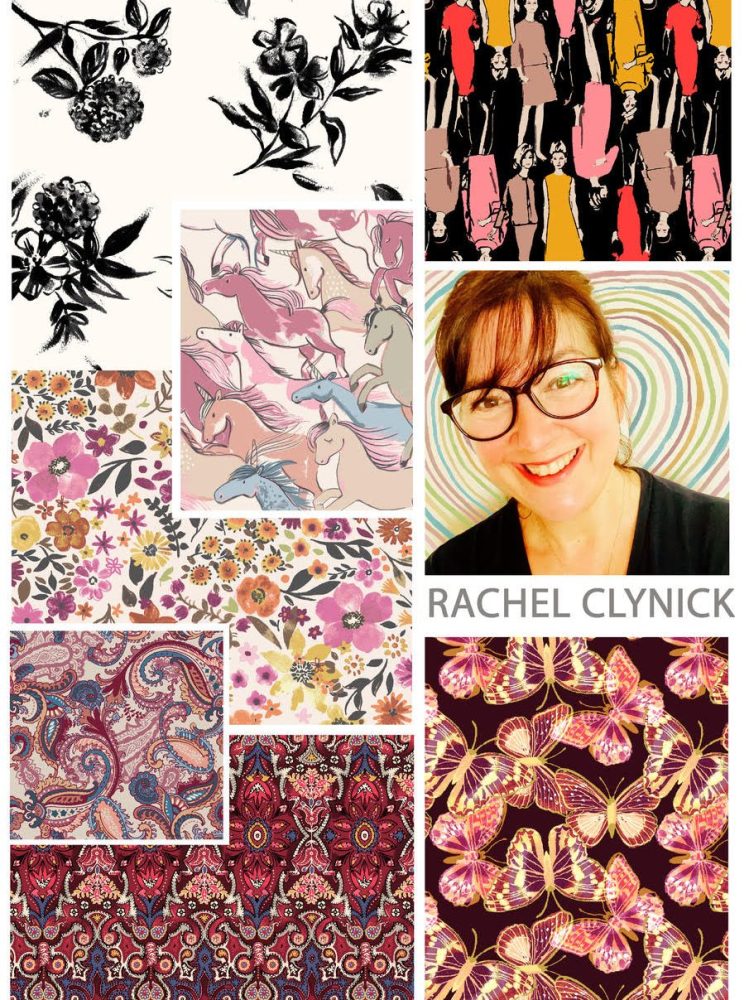
For many years I’ve worked as a print designer for high street retailers but recently I’ve felt a bit jaded with the fashion industry. I started designing when I was just 18 and have had the privilege of working with great high street brands including Next, M&S, George, Mango, Zara, TU and Tesco, along with their suppliers. When I began my career I didn’t realise how serendipitous living in Leicester was for someone so passionate about design. I left college in 1988 when the city’s textile industry was thriving. It already provided jobs to so many people in the county and due to advancements in design technology, local factories were looking to expand (or just establish) their design departments. Luckily for me, some were happy to take on an eighteen year old with no degree or experience so long as they were creative, enthusiastic and hard working.
Though I felt fortunate to land the job I’d always dreamed of at such a young age, I still took the city for granted. Like a fish that doesn’t know what water is, I didn’t appreciate how unique Leicester was and it was only later that I began to question whether my love of textiles was born of an innate creativity or a reaction to my environment. I now suspect it was a bit of both.
Recently, my mum gave me some print outs of our family tree from Ancestry and as I flicked through I was amazed to discover to what extent textiles has shaped our family history. It turns out I come from a long line of felters, knitters, seamstresses and weavers, dating back to the early eighteen hundreds. Even in my recent family history, textiles are a thread binding the family together. My mum and mother-in law both worked as a hosiery operatives, my dad was a factory manager and my father-in-law a knitting machine engineer. My childhood memories are full of women taking on piece work to make ends meet; the buzz of a machine and bags full of garments ready to be sewn common features in their homes and no less a part of domestic life than the dinner cooking on the hob, dishes on the drainer or kids squabbling. In the seventies (and I imagine beyond) ‘piece work’ was how many working class women managed childcare whilst earning extra money for the family. As a child it seemed everyone was connected to the industry and textile factories and mills were a permanent and ubiquitous feature of the urban landscape.
One of my most cherished childhood memories is that of my mum taking us to Wygston’s House costume museum with its Victorian gowns of taffeta and lace and the shop window that you could peek into and see a mock-up of an old draper’s shop. Another treasured childhood memory was my Pippa doll. A fashion doll produced by Palitoy, a local toy manufacturer (now Hasbro) she was a trailblazer, with her up-to-the-minute wardrobe and multi-cultural community of friends. She may have been small but she was ahead of her time and way more popular than Barbie amongst my friends.
As a fashion-mad teen in the eighties everything I needed to get my career in textiles underway was right on my doorstep. In terms of education, the Fashion and Textiles B Tec course I took at Southfields College (now Leicester College) when I was sixteen was a rare find and the Leicester Polytechnic (now DMU) was the first to offer a contour fashion course (established in 1948) and one of the first to offer a degree in Fashion and Textiles.
Also during the eighties George Davies chose Leicester, not just to be the home of the Next head office, but to launch its flagship stores. Its superb trend-driven, Italian tailoring made eighties power dressing affordable and this undoubtedly contributed to its success. I was one of the lucky teenagers who had a Saturday job in one of its stores and I felt a deep sense of pride when wearing my ‘Next Too’ uniform – a fitted grey suit, silky cream shirt with oversized red polka dots that I teamed with chunky black shoes, opaque tights. I also added a slash of crimson lipstick from Next accessories to complete the look.

The Next Too store was on Gallowtree Gate and had a slightly younger/more preppy vibe than the more classic original Next Collection store that was situated on Humberstone Gate. There was also Next Lingerie, Next Accessories and two Next Menswear stores, all of which had a ‘high-end’ feeling about them. These stores, along with the amazing vintage shops and boutiques in places like Loesby Lane and the Silver Arcade put Leicester on the fashionista’s map back then.
It seemed inevitable that I would one day design for Next but it wasn’t until the early noughties that I started freelancing for them; designing prints, for kidswear, ladieswear and the home department. Before that, I worked for another George Davies company (and briefly for the man himself) at George@Asda and many of us local designers have hopped from one major retailer to another across the county over the years. Adams Childrenswear was a stone’s throw away in Nuneaton until the nineties and Boots, once the ‘go-to’ for baby clothes, was just up the road in Nottingham. If that wasn’t enough there were also many established suppliers such as Corah, T.W. Kempton, Pex, Wolsey, Byfords, Cherub and Brewins. Leicester is now home to the head offices of Next, George, Boohoo and Nutmeg with TU Clothing a short distance up the M69 in Coventry.
But it’s not all about manufacturing is it? During the seventies and eighties, new exotic threads were woven into Leicester’s textile history with the opulent shot satins and vibrant silk sari fabrics that shimmered in the windows of shops on Melton Road and the bright, bold Caribbean influences that we see showcased in the vivid costumes at our annual Caribbean Carnival. Though much of Leicester’s textile trade shifted abroad in the nineties, the city was still able to maintain its rich culture of creativity through textiles and hopefully now, with the rise of yarn bombs, sewing and knitting groups, such as the ones contributing to the Leicester Textile Festival, the tradition looks set to continue.
Recently, I fell out of love with fashion. Fast fashion has devalued design; no sooner a garment is in store it’s discarded, modern processes that are applied to fabric, garments and yarn are damaging to the environment and the historic and ongoing exploitation of textile workers is well documented. These aspects of textile production are nothing to be proud of. However, the Leicester Textile Festival looks set to be the celebration of all the good things about textiles (community, creativity and commerce) that we need to rejuvenate and will hopefully inspire a new generation for a more sustainable, more ethical future that doesn’t need to be any less creative, inclusive or collaborative than its past.
It’s sometimes easy to forget that textiles gave me, a working class Leicester girl (from St Peter’s Estate and New Parks), a shot at the creative career I craved as a teenager. Had I have not grown up in the city I wouldn’t have had access to so many work opportunities, been able to connect with so many creatives, nor would I have been inspired by such a rich and diverse culture that is, in many respects, the very fabric of our city.
 Leicester Textiles Festival